

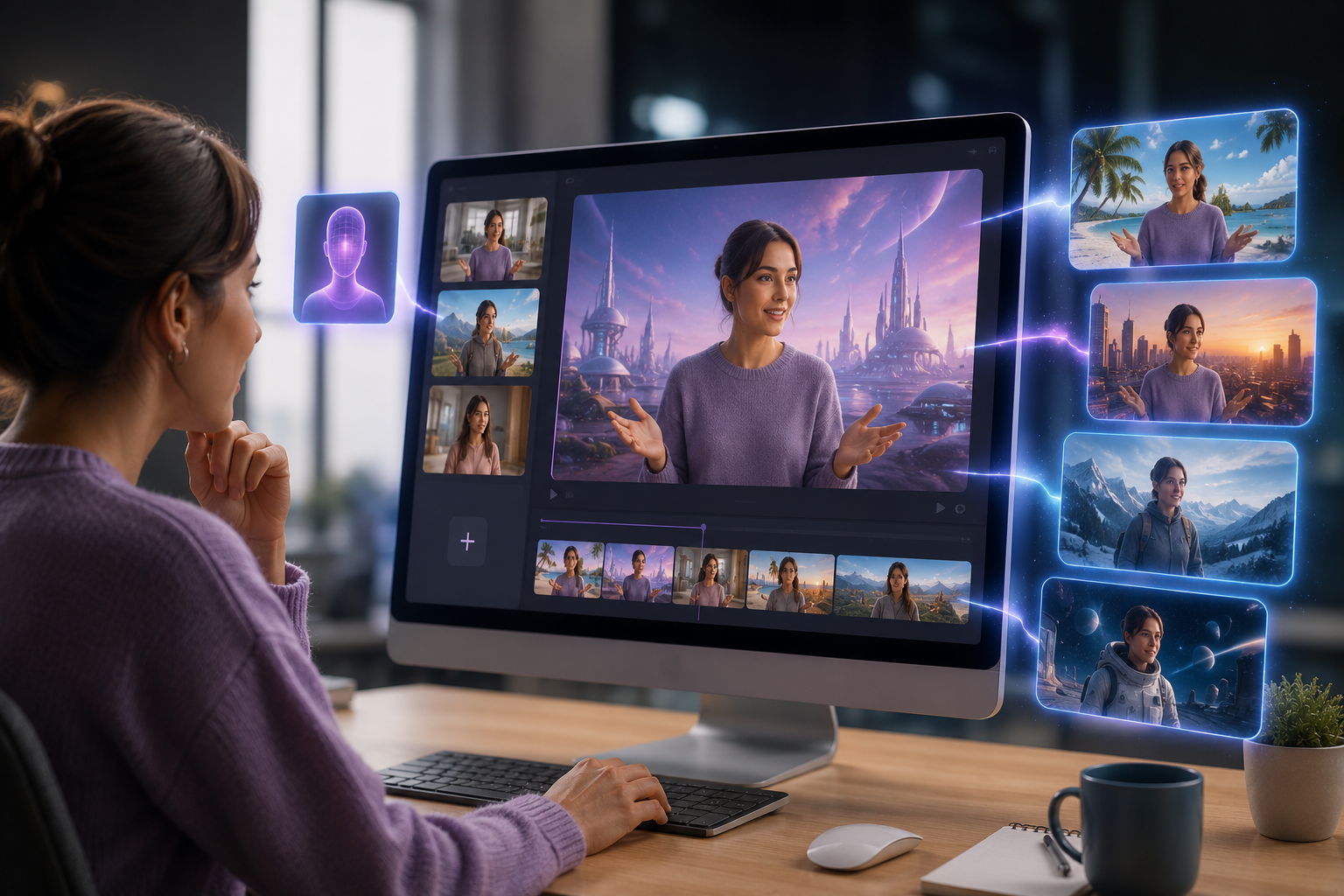
Google Vids is shedding its original identity as a simple, AI-assisted workplace presentation tool. On Thursday, Google announced two major updates to the platform: personal AI avatars that let anyone create a digital version of themselves from a single selfie and voice recording, and Gemini Omni, a multimodal AI model that can generate and edit videos directly from written prompts and reference images.
The timing is notable — OpenAI‘s Sora, which let users generate short AI videos, has since shut down, but Google is clearly betting there’s still real demand for tools that let ordinary people star in AI-made content. Here’s exactly what’s new, how the features work, and where this puts Google Vids relative to established AI avatar tools like HeyGen and Synthesia.
What’s Actually New in Google Vids
The update centers on two distinct capabilities. First, personal avatars let a user build a custom digital version of themselves — one that looks and sounds like them — based on nothing more than a selfie and a short voice recording. Once created, that avatar can deliver any script the user types, with no camera or recording setup required at all.
Second, Gemini Omni brings Google’s multimodal AI model directly into Vids’ video generation and editing workflow. Omni can combine a written prompt with reference images a user uploads to generate new video content, and it can also be used to edit existing footage — swapping out a background, fixing lighting issues in a clip shot on a phone, or adding visual effects. Omni now also supports step-by-step, conversational edits, meaning users can describe changes incrementally as they refine a video rather than starting the editing process over from scratch each time.
How Personal AI Avatars Work
Setting up a personal avatar is described as a simple two-step process: upload a selfie and record a short voice sample, and the system builds a digital avatar matching both your appearance and voice. From there, typing out a script is enough to have the avatar “deliver” that message on camera — a workflow explicitly aimed at situations where someone wants to be on screen without actually setting up and recording themselves.
This builds on an existing AI avatar feature Google previewed at Google I/O and later brought to general availability, which already let users generate a consistent AI presenter for things like training videos or sales pitches using a written script, in up to 24 languages including Arabic, Hindi, Dutch, and Vietnamese. The new personal avatar feature extends that same underlying concept specifically to a user’s own personal likeness, rather than a generic AI presenter.
What Gemini Omni Adds to Video Editing
Beyond avatars, Gemini Omni is positioned as the more general-purpose creative tool inside the update. It can generate original video content from a text prompt combined with reference images, letting users mix and match visual inputs to produce a specific look rather than relying purely on text description. On the editing side, Omni can perform targeted fixes on existing footage — correcting lighting, changing a background, or layering in effects — and now supports iterative, conversational refinement, where a user can keep adjusting a clip through follow-up instructions instead of regenerating it from scratch each time.
Who Can Access These Features
Gemini Omni and personal avatars are currently available to Google AI Pro and Ultra subscribers, as well as eligible Google Workspace business customers. Personal avatars specifically come with an age and regional restriction: access is currently limited to users 18 and older in select regions.
Positioning these updates inside Google Workspace signals a fairly deliberate strategic direction — Google is clearly framing Vids as a business tool suited for things like company announcements, product demos, and internal training videos, even as the personal avatar feature also opens the door to more individual, creative use cases.
The Safety Guardrails Google Built In
Google has built several specific restrictions into how personal avatars can be used. Each avatar is tied directly to the account holder’s own Google Account and is restricted to that account holder’s own likeness — meaning the feature isn’t designed to let one person generate a video of somebody else’s face or voice. Every AI-generated clip produced through these tools also includes an invisible SynthID digital watermark, allowing the content to be verified later as AI-generated even though the watermark itself isn’t visible to a casual viewer.
That likeness restriction has an interesting practical side effect: unlike OpenAI’s Sora, which for a period let users generate videos of public figures — including widely-shared clips of OpenAI’s own CEO — Google’s approach appears specifically designed to prevent similar avatar videos of, for instance, Google’s own CEO Sundar Pichai from being generated by other users.
Where This Puts Google Against AI Video Rivals
By adding personalized avatars and conversational, prompt-driven editing, Google Vids is moving well beyond its original scope as a lightweight, AI-assisted presentation tool. These updates put it in more direct competition with a cluster of dedicated AI avatar and video-generation startups that have built entire businesses around exactly this kind of feature, including HeyGen, Synthesia, Captions, and D-ID.
Google’s advantage in that competition is distribution: Vids is bundled directly into Google Workspace, giving it built-in reach into a massive existing base of business and enterprise users that standalone AI video startups have to acquire from scratch. Whether that’s enough to meaningfully compete on feature depth and output quality with more specialized tools remains to be seen.
How We Got Here: Google Vids’ Feature Rollout
This week’s update is the latest step in a fairly rapid buildout of Vids’ AI capabilities over roughly the past year. Google first previewed AI avatars at Google I/O before bringing them to general availability, alongside an image-to-video feature powered by its Veo 3 model that turns static product shots or branded images into short, eight-second animated clips with motion and sound. The platform also picked up an automatic transcript-trim feature that strips filler words and awkward pauses from recorded footage, and — for business users — the ability to steer the emotional delivery of an avatar’s script and generate avatar voiceovers across 24 languages.
Personal avatars and Gemini Omni represent the most significant expansion yet, shifting Vids from a tool primarily built around scripted, presenter-style content toward something closer to a full, prompt-driven video creation platform.
Conclusion
Google Vids’ latest update is a clear signal that Google sees real staying power in AI-generated personal video content, even as a high-profile rival product in the same space has already shut down. By tying personal avatars tightly to a user’s own verified Google Account likeness and layering in an invisible watermarking system, Google appears to be trying to capture the creative appeal of tools like Sora while avoiding some of the impersonation and misuse issues that dogged earlier AI video products. Whether that balance holds up once personal avatars see wider real-world use is the more interesting question the next few months are likely to answer.






Leave a Reply