

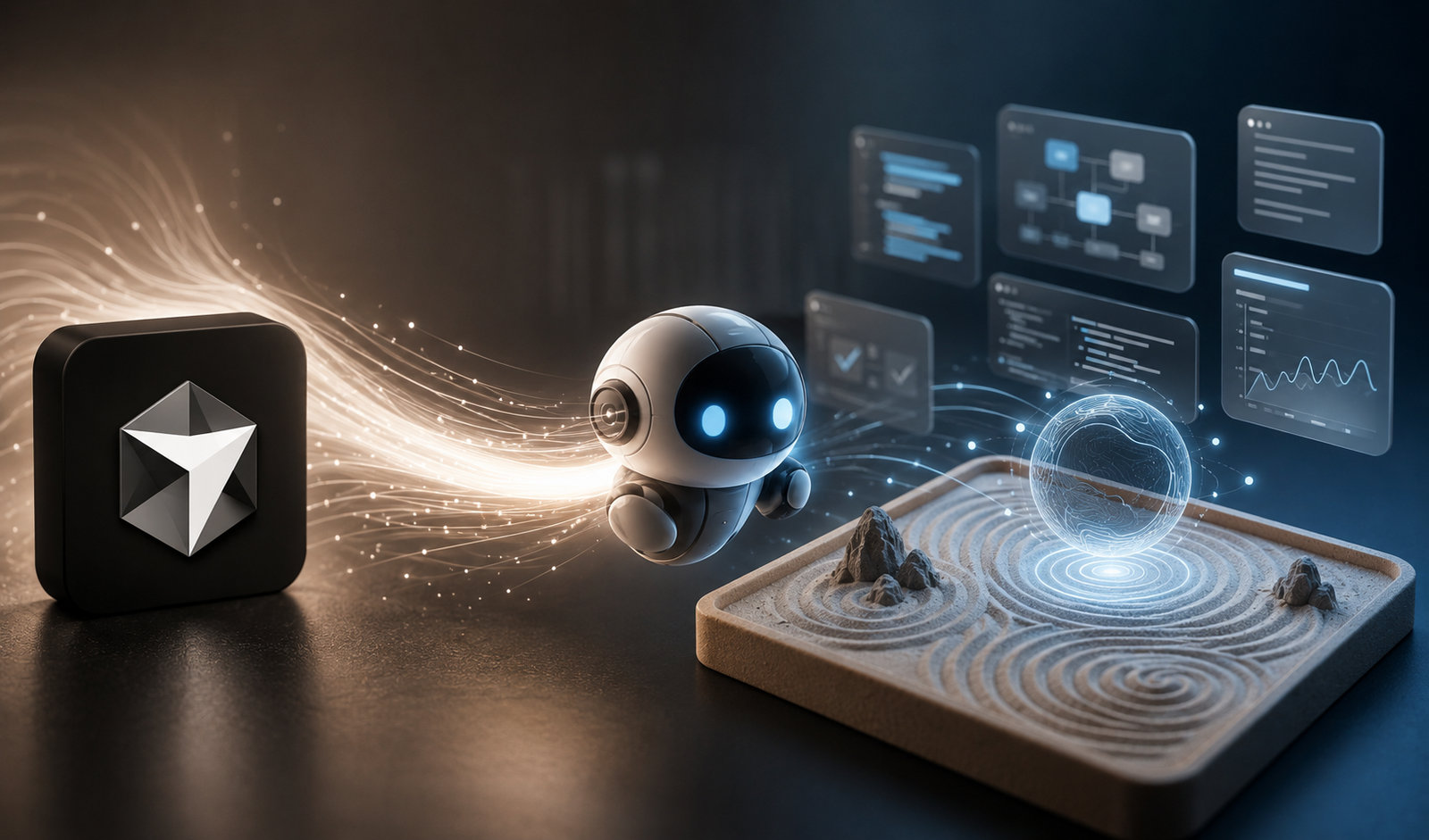
Cursor built its reputation entirely on code. Since launching in 2022, it has become one of the fastest-growing startups in the AI coding space, popular with developers who use it as an AI-powered alternative to a traditional code editor. Now, according to reporting from The Information, Cursor wants to be something bigger than a developer tool.
The company is reportedly developing a general-purpose AI agent — internally called Sand — designed to compete directly with Anthropic’s Claude Cowork and OpenAI’s newly launched ChatGPT Work. Unlike Cursor’s existing products, Sand isn’t aimed at engineers. It’s built for ordinary business users: responding to emails and texts, organizing spreadsheets, and handling day-to-day office tasks that have nothing to do with writing software. Here’s what’s been reported about the project, the timing behind it, and the major wrinkle hanging over whether it ever actually ships.
Table of Contents
- What Sand Is Supposed to Do
- Why Cursor Is Making This Move Now
- The Competitive Landscape It’s Stepping Into
- The $60 Billion Complication
- What’s Still Unconfirmed
- Conclusion
- Sources
What Sand Is Supposed to Do
According to the reporting, Sand is designed to function as a personal assistant for non-developers — a notable departure for a company whose entire product lineup has been built around software engineering workflows. Reported capabilities include responding to emails and texts, organizing spreadsheets, and handling general engineering work, positioning it closer to a workplace productivity agent than a coding tool.
That framing puts Sand in the same general category as Anthropic’s Claude Cowork, which launched in January as a hands-on agentic collaborator that works across a person’s desktop, and which recently expanded to mobile and web. It also places Sand alongside OpenAI’s ChatGPT Work, an agent built for tasks more involved than a typical chat request, which OpenAI launched publicly this month.
Cursor has reportedly already rolled the project out internally, testing it with employees before making any decision about a wider release — consistent with how the company has approached past product launches, according to the reporting.
Why Cursor Is Making This Move Now
The timing lines up with a specific business development: Cursor reportedly began working on Sand after it started leasing computing capacity from SpaceX’s AI division, SpaceXAI, back in April. That relationship gave Cursor access to compute resources it likely didn’t have readily available before, which may have made a resource-intensive general-purpose agent project more feasible to pursue.
There’s also a clear strategic logic behind the move, independent of the SpaceX relationship. Cursor’s entire existing customer base is developers — a large and valuable market, but a narrower one than the broader knowledge-worker audience that general-purpose AI agents are increasingly targeting. Building a product aimed at non-developers is a fairly direct way to diversify beyond that core audience without abandoning it.
The Competitive Landscape It’s Stepping Into {#the-competitive-landscape-its-stepping-into}
Sand would be entering a workplace AI agent category that’s getting crowded fast, and mostly all at once. Anthropic’s Cowork was already established with a January launch and a subsequent expansion to mobile and web. OpenAI’s ChatGPT Work launched publicly the same week Cursor’s project was first reported — timing that underscores how quickly multiple major AI companies are converging on the same idea: an agent capable of handling broader knowledge work, not just answering questions in a chat window.
For Cursor, entering this space means competing against companies with substantially more experience serving non-developer, mainstream business users. Cursor’s brand recognition and trust currently exist almost entirely within the developer community — a strength for a coding tool, but not necessarily a transferable advantage for a general office assistant aimed at people who’ve never used Cursor’s existing products.
The $60 Billion Complication
Here’s the part of this story that makes Sand’s future genuinely uncertain: Cursor is reportedly in the process of being acquired by SpaceXAI, in a deal valuing the company at around $60 billion, with the transaction expected to close in the second half of 2026.
That pending acquisition creates real ambiguity around Sand’s roadmap. Multiple reports note that it’s unclear whether the product will actually reach the market, given that a merger of this size could reshape Cursor’s priorities and product direction well before any public launch decision is made. It’s a reminder that “a company is reportedly building X” is meaningfully different from “X is coming soon” — particularly when that company is simultaneously being absorbed into a much larger organization.
What’s Still Unconfirmed
To keep this in perspective, a few things about Sand remain genuinely unclear based on current reporting:
- No confirmed public launch timeline. Sand is reportedly still in internal testing, with no announced release date.
- No official comment from Cursor. When reached for comment, Cursor reportedly declined to confirm or elaborate on the project.
- Unclear relationship to the SpaceXAI merger. It’s not established whether Sand would continue as planned, get folded into SpaceXAI’s broader roadmap, or be shelved entirely once the acquisition closes.
- Feature set could still change. Early-stage internal projects at any company often look different by the time — or if — they actually ship.
Conclusion
Cursor’s reported work on Sand is a genuine signal of where the company sees its next phase of growth: not just serving developers better, but expanding into the same general-purpose workplace AI category that Anthropic and OpenAI are already actively building out. Whether it ever reaches the public is a separate question entirely, tangled up in a $60 billion acquisition that could reshape Cursor’s priorities before Sand gets anywhere close to a launch decision. For now, it’s a data point about where the AI agent market is heading — three major players converging on the same idea within weeks of each other — more than it is a product anyone can actually use yet.






Leave a Reply