

Introduction
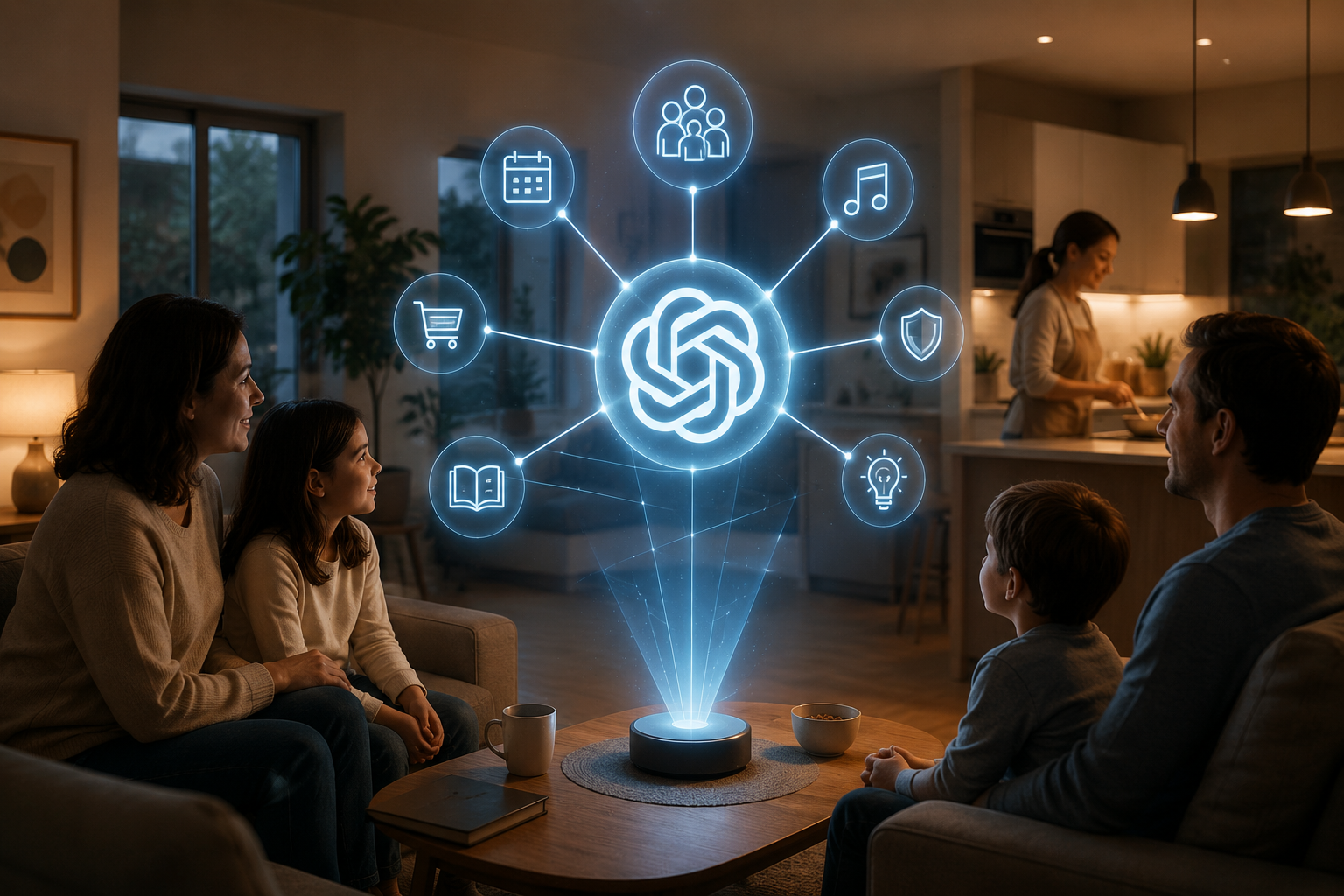
For most of its three-year existence, ChatGPT has been sold and understood as an individual productivity tool — something you use at your desk, on your own account, for your own work. That framing is starting to shift. OpenAI has posted a job listing for a San Francisco-based product manager whose entire mandate is building ChatGPT experiences for families, caregivers, and older adults.
It’s a small hire on paper. But it lands at a moment when the data backing it up is hard to ignore: ChatGPT’s user base is aging up, parents are adopting it faster than almost any other demographic, and rivals like Google’s Gemini are already ahead in reaching households. Here’s what’s actually changing, what the numbers show, and why “family AI” is shaping up to be the next real battleground in consumer tech.
Table of Contents
- The Hire That Signals the Shift
- The Numbers Behind the Pivot
- Where OpenAI Stands Against Rivals in Households
- The Safety Problem OpenAI Can’t Ignore
- Is a ChatGPT Family Plan Actually Coming?
- What Household AI Might Look Like Next
- How Google, Apple, and Meta Made the Same Pivot
- What Parents Can Actually Do Right Now
- Conclusion
The Hire That Signals the Shift
The job posting itself is unglamorous — a product manager role, based in San Francisco, tasked with building features for “families, caregivers, and other trust-sensitive consumer experiences.” OpenAI hasn’t commented publicly on the listing beyond what’s written in it.
But industry analysts are reading real strategic intent into it. Ben Bajarin, CEO of the consultancy Creative Strategies, described the move as evidence that OpenAI is starting to think of its products less as individual tools and more as technology meant to live inside a household — comparing the trajectory to the path Google, Apple, and Meta each took as their platforms became embedded in daily life. His expectation is that this kind of hire tends to precede a broader pattern: family plans, dedicated child and teen profiles, caregiver-oriented tools, shared household memory, AI tutoring features, and tighter safety controls.
Notably, this isn’t OpenAI’s first move in this direction — it follows earlier steps like ChatGPT Edu for universities, temporary chat modes, and expanded content filters aimed at younger or more sensitive use cases. The family-focused hire looks less like a standalone experiment and more like the next step in a pattern that’s been building for over a year.
The Numbers Behind the Pivot
The demographic data behind this decision is the real story. According to Sensor Tower estimates, ChatGPT’s audience is visibly getting older and more parent-heavy:
| Metric | A Year Ago | Now (Q2 2026) |
|---|---|---|
| Global ChatGPT users aged 35+ | 26% | 31% |
| Global ChatGPT users aged 18–24 | 34% | 29% |
| U.S. smartphone-using parents on ChatGPT | 16% | ~24% |
| ChatGPT users aged 45+ (YoY change) | — | +3 percentage points |
That last figure is worth sitting with: ChatGPT is adding older users faster than Copilot, while Claude and Gemini actually saw declines in that same 45-and-up segment over the same period. Younger users still make up a large share of the platform, but the growth engine right now is clearly coming from an older, more family-anchored audience.
Where OpenAI Stands Against Rivals in Households
Despite that growth, ChatGPT isn’t the leader in reaching parents specifically — at least not yet. Among U.S. smartphone users who are parents, market share breaks down like this for Q2:
- Gemini — 32% reach, the widest of any assistant
- ChatGPT — 24% reach
- Claude — 4% reach
- Copilot — 2% reach
Google’s built-in advantage here is fairly obvious: Gemini ships pre-installed on Android phones and is already woven into tools families use by default, like Search, Photos, and Google Family sharing. OpenAI has no equivalent distribution advantage — everything ChatGPT gains with parents, it has to earn through the app itself. That’s likely part of what makes a dedicated families product role worth the investment: closing a reach gap that other platforms got for free.
The Safety Problem OpenAI Can’t Ignore
Any push toward families runs directly into a harder question: is the product actually safe for the people in that household who aren’t adults?
The timing here matters. OpenAI has faced multiple lawsuits from parents who allege that ChatGPT contributed to harm their children experienced, including cases involving suicide. Separately, new research from the Family Online Safety Institute — a survey of more than 4,000 families across the U.S. and Australia — found a significant awareness gap: 27% of U.S. parents said their child had used generative AI in the past week, while 38% of children reported using it themselves. Parents are consistently underestimating how much their kids are already interacting with these tools.
In response, OpenAI has already rolled out some protective measures, including:
- Parental controls for teen accounts
- Automatic routing of sensitive conversations to more careful reasoning models
- A “Trusted Contact” feature that can alert a family member or caregiver in situations involving potential self-harm
Stephen Balkam of the Family Online Safety Institute has argued that AI companies need to design differently for younger users from the outset — with stronger content controls, age-appropriate experiences, real parental oversight, and consistent reminders that users are talking to an AI, not a person. That framing — building products correctly for kids rather than retrofitting safety later — is likely to define how closely this new family-focused role is scrutinized.
Is a ChatGPT Family Plan Actually Coming?
This is the question most people searching this topic actually want answered, and the honest answer right now is: not yet, and not officially.
ChatGPT currently offers only individual subscriptions (Plus, at $20/month) and business-oriented plans like ChatGPT Team, which starts around $25–30 per seat with a two-seat minimum — a poor fit and a steep cost for an ordinary household. There is no discounted multi-person household tier, and OpenAI’s terms of service prohibit sharing a single individual account across several people.
The families-focused hire doesn’t change that today. But it’s a strong leading indicator. Products organizations rarely staff a dedicated role around a demographic without an eventual roadmap attached to it — and if the safety and profile-management groundwork gets built first, a genuine family plan becomes a far easier and more logical thing to launch on top of it later.
What Household AI Might Look Like Next
If Bajarin’s read on the industry pattern holds, the next wave of features from OpenAI — and likely its competitors — probably clusters around a few predictable categories:
- Multi-profile households, similar to how streaming and gaming platforms separate adult and child accounts under one subscription
- Shared household memory, where the assistant retains context useful across family members (schedules, preferences, recurring tasks) without blending private conversations together
- Caregiver-specific tools, aimed at the growing number of older adults and the family members supporting them
- AI tutoring features, building on OpenAI’s existing outreach through youth and community programs
- Stronger, more visible safety defaults, rather than settings parents have to discover and configure themselves
None of this is confirmed by OpenAI. But it’s a reasonable map of where “family AI” is likely headed across the industry, not just at OpenAI specifically — Google, Apple, and Meta each built comparable household layers into their platforms once daily-life usage caught up with individual-user adoption.
How Google, Apple, and Meta Made the Same Pivot
OpenAI isn’t inventing this playbook — it’s following one. Every major consumer platform has gone through a near-identical arc: launch for individual power users, grow past that base organically, then retrofit a household layer once families are already using the product whether or not it was designed for them.
- Google built Family Link and Google One Family Sharing years after Search, Gmail, and Android were already mainstream. Family features weren’t part of the original product — they were a response to usage patterns.
- Apple added Family Sharing, Screen Time, and child-specific App Store restrictions well after the iPhone became a general-purpose device sitting in most households.
- Meta rolled out parental supervision tools for Instagram and dedicated teen accounts only after regulatory pressure and years of the platform already being widely used by minors.
The common thread is that none of these companies designed for families from day one — they all reacted once the data made it undeniable. OpenAI’s timing looks similar, except it’s moving faster: ChatGPT is only about three years old, and the family-focused hire is arriving well earlier in the company’s life cycle than the equivalent moves at Google, Apple, or Meta. That could mean OpenAI has learned from watching those companies retrofit safety and sharing tools under pressure, and is trying to get ahead of the same problem this time.
What Parents Can Actually Do Right Now
Since there’s no official family plan or child-specific ChatGPT tier yet, most of the burden of managing household AI use currently falls on parents themselves. A few things are worth doing today, regardless of what OpenAI ships next:
- Check what’s already available. OpenAI has already introduced parental controls for teen accounts and a Trusted Contact feature — most parents simply don’t know these exist or haven’t set them up.
- Talk to your kids directly about usage, rather than relying on assumptions. The gap between what parents think their children are doing (27%) and what kids report doing themselves (38%) suggests conversation closes more of that gap than any setting will.
- Treat ChatGPT accounts as individual, not shared, for now. Sharing one login across a household isn’t just against the terms of service — it also means losing any age-appropriate controls tied to a specific account.
- Reassess in a few months. Given the pace of this shift, it’s reasonable to expect concrete family-oriented features — not just a hire — within the next product cycle or two.
Conclusion
A single product manager job listing isn’t a product launch. But it’s a clear tell that OpenAI sees where its own growth is actually coming from — not just power users and developers, but parents, caregivers, and older adults who are already showing up in the usage data faster than anywhere else. Whether that turns into a real family plan, better safety defaults, or something else entirely, the direction is hard to miss: ChatGPT is no longer being built for just one person in the house.
Do you think a household AI plan makes sense for your family, or does sharing an assistant across generations raise more concerns than it solves? Let us know in the comments.






Leave a Reply