

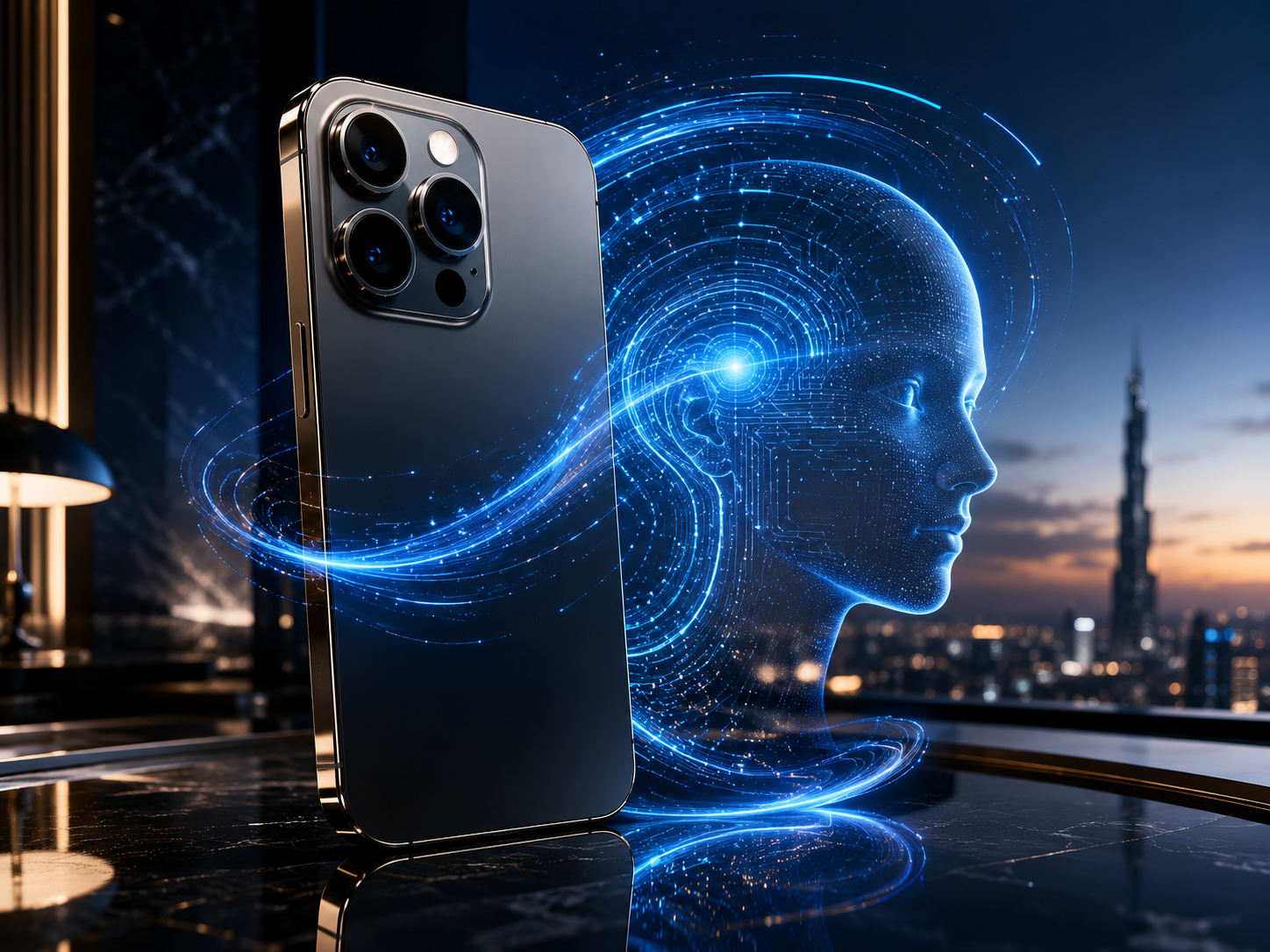
For most of the smartphone era, “luxury” meant precious materials: solid gold casings, sapphire crystal displays, hand-stitched leather, diamond embellishments. Craftsmanship and exclusivity did the work that specs did on mainstream flagships. In 2026, that definition is being rewritten. Across the premium phone market, AI has become the new status symbol — not as a bundled feature, but as the actual centerpiece of what makes a device “luxury” in the first place.
The shift shows up in a striking split within the category itself: some luxury phones are staying close to their roots — precious metals, bespoke design, limited numbered runs — while others are repositioning entirely around AI capability, marketing themselves less as phones and more as “proactive intelligent assistants” wrapped in premium materials. Here’s what’s actually driving that shift, and how different corners of the luxury phone market are responding to it.
The “AI Agent Phone” Concept
The clearest example of AI becoming the organizing principle of a luxury device, rather than an add-on, is the emergence of what’s being marketed as the “AI Agent Phone.” One prominent example, the VERTU Agent Q, is built around a dedicated AI assistant — branded “Ruby Talk” — designed for complex task management and proactive assistance, rather than simply responding to typed or spoken commands on request. The device pairs that AI-first approach with a 50MP main camera, a titanium frame, a scratch-resistant sapphire crystal display, and a five-layer security architecture aimed at users who prioritize data sovereignty and privacy.
That combination — proactive AI woven through the device’s core interaction model, wrapped in traditional luxury materials — is emblematic of where a meaningful slice of the premium phone market is heading: less “a phone with a good camera and AI features,” more “an AI assistant that happens to be a phone.”
Where Mainstream Flagships Fit Into “Luxury” {#where-mainstream-flagships-fit-into-luxury}
Not every device competing in this space comes from a dedicated luxury phone maker. Mainstream flagships are increasingly being included in “luxury” and “exclusive” phone roundups specifically because of how far their AI and camera systems have advanced. The Samsung Galaxy S25 Ultra, for instance, pairs a Snapdragon 8 Elite for Galaxy processor with a 200-megapixel main camera sensor, a 6.9-inch QHD+ anti-reflective display, seven years of guaranteed software updates, and an AI-driven experience layered throughout the device — all features now being marketed and discussed in the same breath as traditionally bespoke, materials-first luxury phones.
Google’s Pixel 10 Pro XL is positioned similarly, but around a different pitch: rather than precious materials, its case for inclusion in the luxury category rests on the elegance of pure software, seven years of guaranteed AI-driven updates, and computational photography that remains difficult for competitors to match. Some coverage frames it explicitly as the luxury pick for buyers who prize intelligence and software polish over ostentatious materials — a meaningfully different value proposition than a gold-cased, diamond-embellished device, but one increasingly discussed in the same market conversation.
Materials Still Matter — But They’re No Longer the Whole Story
Traditional luxury materials haven’t disappeared from this category — they’ve become one differentiator among several, rather than the primary one. The 2026 luxury smartphone market still leans heavily on precious metals, exotic leathers, sapphire crystal, and rare woods like African blackwood and Macassar ebony, alongside meticulous hand-assembly of individual components.
Brands like Gresso continue to compete on that more traditional axis, offering titanium-and-Gorilla-Glass builds with a minimalist aesthetic and individually numbered, limited-edition runs that function as much as collectibles as functional devices. But even craftsmanship-first brands are increasingly layering AI capability on top of that foundation rather than treating materials and construction as the entire pitch, reflecting how central AI has become to how “premium” gets defined across the category as a whole.
Privacy Is Becoming the Real Luxury Differentiator {#privacy-is-becoming-the-real-luxury-differentiator}
As AI features become more common across both luxury and mainstream devices, several industry observers point to privacy and security architecture as the feature actually separating “merely expensive” phones from genuinely elite ones. Multi-layered security protocols, hardware-grade encryption, and sophisticated biometric authentication are increasingly standard across the top of this category, with several devices processing biometric data locally on-chip rather than in the cloud.
AI is playing a direct role in that security layer, too — some devices now use AI to analyze voice patterns for call authentication and detect real-time spoofing attempts, with adaptive call encryption that adjusts based on network conditions. The pitch across much of this segment is that on-device AI processing, rather than cloud-dependent AI, is what genuinely protects user data — positioning privacy itself as a luxury feature rather than a baseline expectation.
What This Costs
Pricing across this category varies enormously depending on how much of the “luxury” comes from materials versus technology. Dedicated AI-first luxury devices like the VERTU Agent Q start at $5,380, reflecting both its AI capabilities and its titanium-and-sapphire construction. More traditionally materials-driven luxury phones — solid gold casings, diamond embellishments — can run substantially higher depending on the specific materials and customization involved, while mainstream flagships positioned within the “luxury” conversation, like the Galaxy S25 Ultra or Pixel 10 Pro XL, remain priced closer to typical premium flagship territory rather than true luxury-tier pricing.
Industry commentary suggests that split is likely to persist rather than converge: dedicated luxury AI devices are expected to command premium pricing built around exclusivity and bespoke construction, while mainstream flagships continue offering increasingly advanced AI capability at more broadly accessible premium price points.
A Note on How This Market Talks About Itself
It’s worth flagging directly: much of the available coverage and terminology in this space — including phrases like “AI Agent Phone” and detailed feature breakdowns of specific devices — originates from luxury phone manufacturers’ own marketing content rather than independent product reviews. That’s a normal feature of a small, specialized luxury category with limited independent press coverage, but it’s worth reading claims about specific proprietary AI systems, exact security architectures, and comparative superiority with that context in mind, rather than treating manufacturer branding as independently verified performance.
Conclusion
Luxury smartphones haven’t abandoned what’s traditionally defined the category — precious materials, hand-assembly, exclusivity — but AI has clearly become a co-equal pillar of what “premium” means in 2026, rather than a bundled extra. Whether that shows up as a dedicated AI agent phone, a mainstream flagship earning a spot in luxury conversations purely on software strength, or a traditional materials-first device layering AI capability on top, the direction is consistent: the next status symbol in this category is increasingly measured in what a device’s AI can do for you, not just what it’s made of.






Leave a Reply