

Introduction
For years, OpenAI has talked about building hardware, but the details stayed frustratingly vague. That changed this week. New reporting from Bloomberg, followed by a wave of coverage from outlets including Reuters, TechCrunch, and 9to5Mac, has finally given the world its clearest picture yet of what OpenAI’s first physical product will actually be—and the timing couldn’t be more dramatic, landing just days after Apple filed a lawsuit accusing OpenAI of stealing trade secrets.
Here’s everything we know so far.
What the Device Actually Is
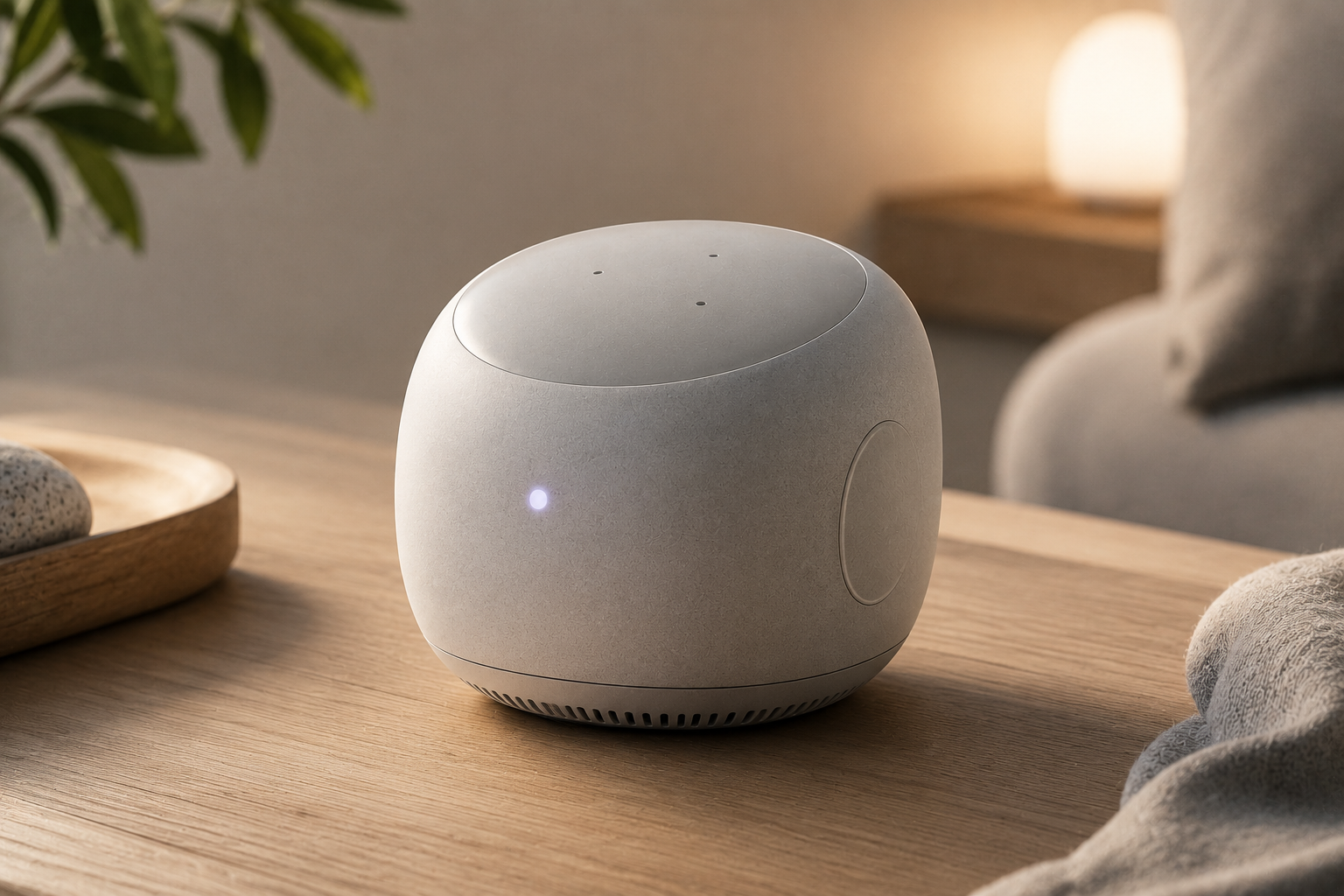
According to Bloomberg’s reporting, OpenAI’s debut hardware product is a screenless, portable smart speaker designed to live in the home and act as a kind of humanlike AI companion. Internally, the device is reportedly being pitched as one that can proactively learn about its owner over time rather than simply waiting for commands.
A few defining characteristics have emerged across multiple reports:
- No screen. Interaction happens primarily through voice.
- Physical movement. The device reportedly includes mechanical elements that let it move on its own, creating the impression that it’s “alive” rather than a static object.
- Cameras and sensors. Built-in cameras and other sensors are expected to give it contextual awareness of its surroundings, including who is in the room and what’s happening around it.
- Deep personalization. The assistant is expected to learn from ongoing interaction and, notably, from access to the user’s email.
- Proactive behavior. Rather than only responding when prompted, the device is designed to make unprompted suggestions.
- ChatGPT integration. It will draw on OpenAI’s broader ChatGPT capabilities, including answering questions, playing media, responding to messages, and controlling smart home appliances.
Taken together, this puts the device squarely into a category some observers have started calling “desktop robots”—devices that convey humanlike presence through voice and body language rather than through an actual humanoid appearance.
The Jony Ive Connection
A major reason this device is drawing so much attention is who’s behind the design. OpenAI’s push into hardware traces back to its roughly $6.5 billion acquisition of io Products, a startup founded by legendary former Apple design chief Jony Ive. Ive is now leading design across both companies, working alongside his independent design studio, LoveFrom, and OpenAI’s Chief Hardware Officer Tang Tan—who is himself a former Apple design lead and io Products co-founder.
That pedigree is central to both the excitement and the controversy surrounding the device, since it puts several people with deep Apple design experience at the center of OpenAI’s first consumer product.
Price and Timeline
Reported pricing places the device between $200 and $300, positioning it above budget smart speakers like Amazon’s Echo Dot but below Apple’s HomePod.
The timeline, however, has been a moving target. OpenAI initially set ambitious goals, reportedly telling staff it hoped to ship 100 million devices faster than any company had shipped that volume of a new product before, with a possible reveal in the second half of 2026. More recent reporting suggests that goal has slipped: a court filing reportedly indicates the device won’t ship before February 2027, with delays tied to unresolved questions about the device’s “personality,” data privacy handling, and computing infrastructure.
Worth noting: earlier reporting from January 2026 described a different rumored product—a behind-the-ear wearable referred to internally as “Sweetpea.” Whether that project has been folded into, replaced by, or developed alongside the speaker now being reported is unclear. It’s a reminder that details are still shifting as OpenAI’s hardware plans become public.
The Apple Lawsuit Looming Over Everything
The timing of this reporting is impossible to separate from a major legal fight. Apple recently sued OpenAI, along with two former employees, alleging misappropriation of trade secrets connected to OpenAI’s push into consumer hardware. Apple has characterized the allegations as just the beginning, suggesting further misconduct could surface during legal discovery. OpenAI has denied any wrongdoing and maintains that its device differs significantly from anything currently on the market.
Apple’s complaint reportedly centers partly on Tang Tan, alleging he brought over intellectual property from his time at Apple. OpenAI has also reportedly hired more than 400 former Apple employees as it builds out its hardware division—a detail Apple has pointed to directly in its legal filings.
Not Just a Speaker: A Family of Devices
Bloomberg’s reporting indicates the speaker is just the opening act. OpenAI is said to be developing roughly five hardware products in total, with longer-term ambitions that include a mobile AI device positioned as a potential smartphone replacement. The company has also reportedly explored wearable products, including a pendant, and has expressed interest in home robotics more broadly.
Sam Altman has previously described this broader effort as building a “new generation of AI-powered computers”—though what that phrase means in practice is still taking shape.
Why This Matters
This device places OpenAI in direct competition with Apple, Amazon, and Google in the smart home space, and more specifically pits it against Apple’s own rumored desktop robot project, internally known as Project J595—a screen-equipped device on a mechanical arm designed to display an animated “face” and limited body language.
The stakes go beyond a single gadget. OpenAI is reportedly exploring hardware partly as a way to diversify its revenue ahead of a possible IPO, and the broader “AI companion hardware” category has already attracted serious investment—AI hardware startup Hark, for instance, raised a $700 million Series A in May at a $6 billion valuation for a similar “personal intelligence” concept, even without a defined device to show for it yet.
What’s Still Unknown
Despite the wave of reporting, several important details remain unconfirmed:
- The device’s official name (early references to “io” have reportedly been dropped due to a trademark dispute with hearing aid startup iyO)
- A confirmed release date beyond the rough “no earlier than February 2027” window
- Exactly how the privacy implications of email access and always-on cameras/microphones will be handled
- Whether Apple’s lawsuit could delay or otherwise affect the launch
Conclusion
OpenAI’s first hardware device is coming into focus: a screenless, camera-equipped smart speaker with a personality, designed by a team stacked with former Apple talent, priced to compete directly with existing smart home players. But between an ongoing lawsuit from Apple, unresolved questions about privacy and “personality,” and a launch timeline that keeps shifting, there’s still a lot left to learn before this product actually reaches shelves. Expect updates to keep coming quickly given how fast this story is already moving.






Leave a Reply