

OpenAI’s Hardware Ambitions Take Shape
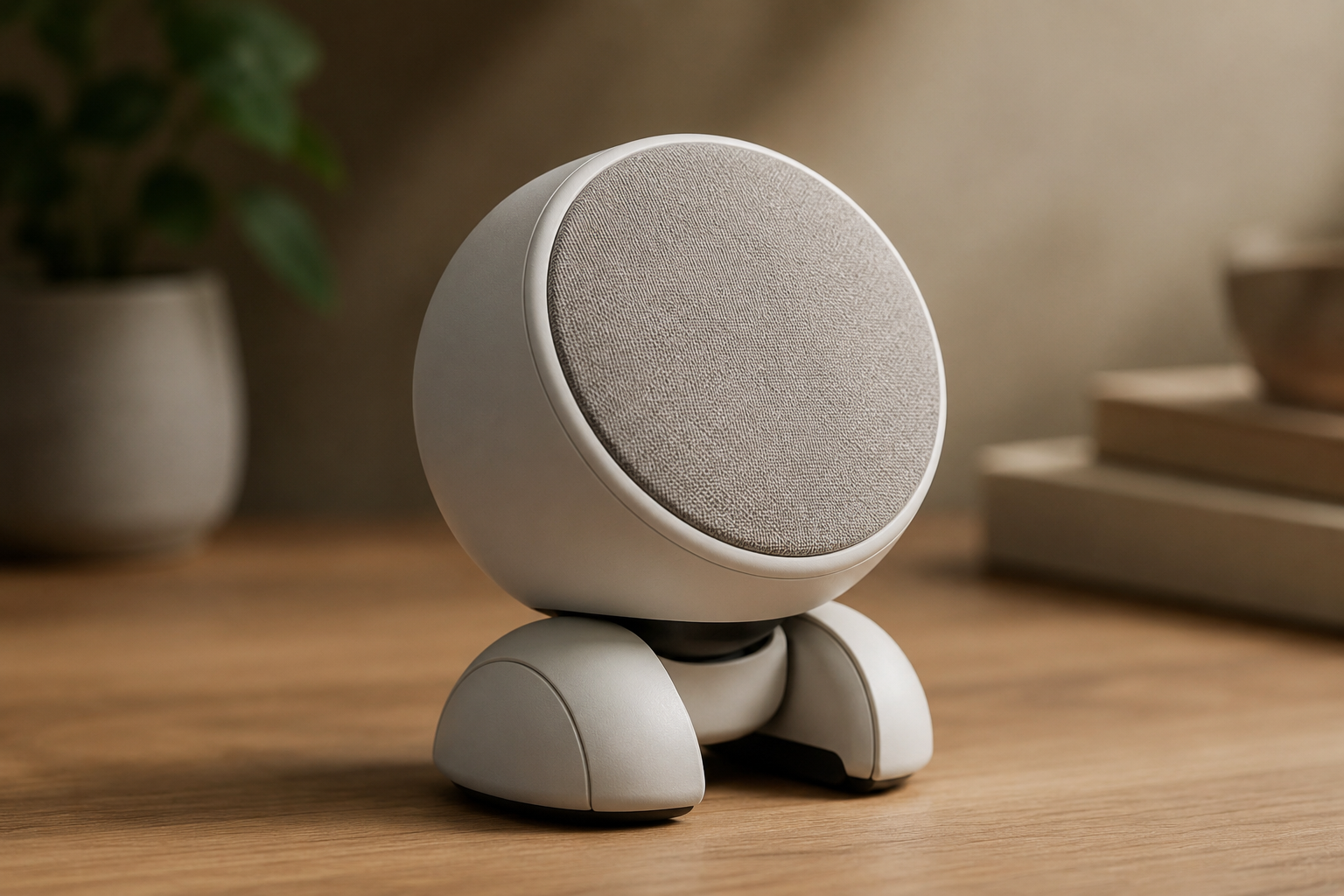
After years of hints, hires, and speculation, OpenAI’s long-promised move into physical hardware finally has a shape — and it’s not a phone. According to a Bloomberg report from journalist Mark Gurman, OpenAI’s first consumer device is a portable, screen-free smart speaker being pitched internally as “a new type of home computer for the AI era.”
The device is still under active development and hasn’t been officially confirmed by OpenAI, but multiple outlets, including TechCrunch and Yahoo Tech, have independently cited the same Bloomberg reporting.
What the Device Reportedly Does
Unlike a typical smart speaker that sits idle until summoned, OpenAI’s device is designed to feel like an active presence in the home. According to people familiar with the plans, it will:
- Control smart-home appliances, play media, answer questions, and respond to messages
- Run an advanced version of ChatGPT’s Voice Mode, referred to internally as GPT-Live, capable of listening and talking at the same time and adapting more naturally mid-conversation
- Include a built-in camera and additional sensors that let it perceive its surroundings and adjust its responses to context
- Grow “increasingly personalized and proactive” over time, learning a user’s habits, anticipating needs, and drawing on personal information such as emails
- Run on a rechargeable battery, so it can be carried from the laundry room to the kitchen to the bedroom throughout the day, or left plugged in as a stationary unit
The most unusual detail is mechanical: the speaker reportedly includes moving components, designed to give it a sense of physical presence rather than reading as a passive object. One outlet described the concept as “half-speaker, half-robot.” OpenAI’s aim, according to the report, is for the device to function as a physical embodiment of ChatGPT — something with enough personality that owners relate to it as a companion rather than a tool.
Pricing has been reported separately by The Information at somewhere in the $200 to $300 range, positioning it against premium smart speakers rather than budget models.
The Team Behind It
The project traces back to OpenAI’s roughly $6.5 billion acquisition of io Products last year, the hardware startup co-founded by former Apple design chief Jony Ive. Ive’s design studio, LoveFrom, is helping shape the device, and the broader hardware effort reportedly involves more than 400 people hired from Apple, including engineers who worked on the iPhone and Mac. OpenAI’s Chief Hardware Officer, Tang Tan, is a former head of iPhone product design, and Apple’s former head of industrial design, Evans Hankey, is also involved in developing the speaker and future OpenAI devices.
OpenAI reportedly has around five hardware products in some stage of development, with the speaker positioned as the first to reach the public. A debut is expected later in 2026, with a broader release targeted for 2027 — though that timeline could shift given the company’s current legal entanglements.
A Lawsuit Complicates the Picture
The report lands just days after Apple filed a lawsuit against OpenAI, accusing the company of stealing trade secrets through the hiring of former Apple employees, including Tan. Apple has said the allegations detailed in its complaint are just “the tip of the iceberg,” with more expected to surface during discovery.
OpenAI has denied wrongdoing, stating it has “no interest in other companies’ trade secrets,” and that it believes “in fair competition and allowing people the freedom to work wherever they choose.” Sources familiar with OpenAI‘s hardware plans told Bloomberg the company believes its speaker “veers significantly” from anything currently on the market and is unlikely to violate any of Apple’s trade secrets, given how different its audio system and hardware are from products like the HomePod.
News of the device had a brief, tangible effect on the market: shares of speaker maker Sonos dropped more than 10% in after-hours trading following the report before recovering some of that loss, while Apple’s stock dipped slightly.
Why This Matters
The move puts OpenAI in more direct competition with Apple, Amazon, and Google, all of which have established smart-speaker product lines. It also arrives as consumer AI hardware is drawing serious investor interest more broadly. Hark, a startup founded by Brett Adcock, raised an oversubscribed $700 million Series A in May at a $6 billion valuation to build what it calls “personal intelligence” hardware, and it isn’t the only company chasing the category before a single mass-market device has shipped.
For OpenAI specifically, the timing is notable: the company is reportedly preparing for an initial public offering in the coming months, and a successful hardware launch would give it a physical foothold beyond apps and APIs — a foothold OpenAI has openly framed as a long-term step toward reducing reliance on smartphones altogether.
Whether the finished product resembles what’s been described will depend on how development, and the Apple lawsuit, play out over the coming months. For now, the picture that’s emerged is a device unlike anything currently on shelves: no screen, a camera watching the room, a battery for wandering between rooms, and moving parts meant to make it feel less like a speaker and more like something that’s actually there with you.






Leave a Reply