

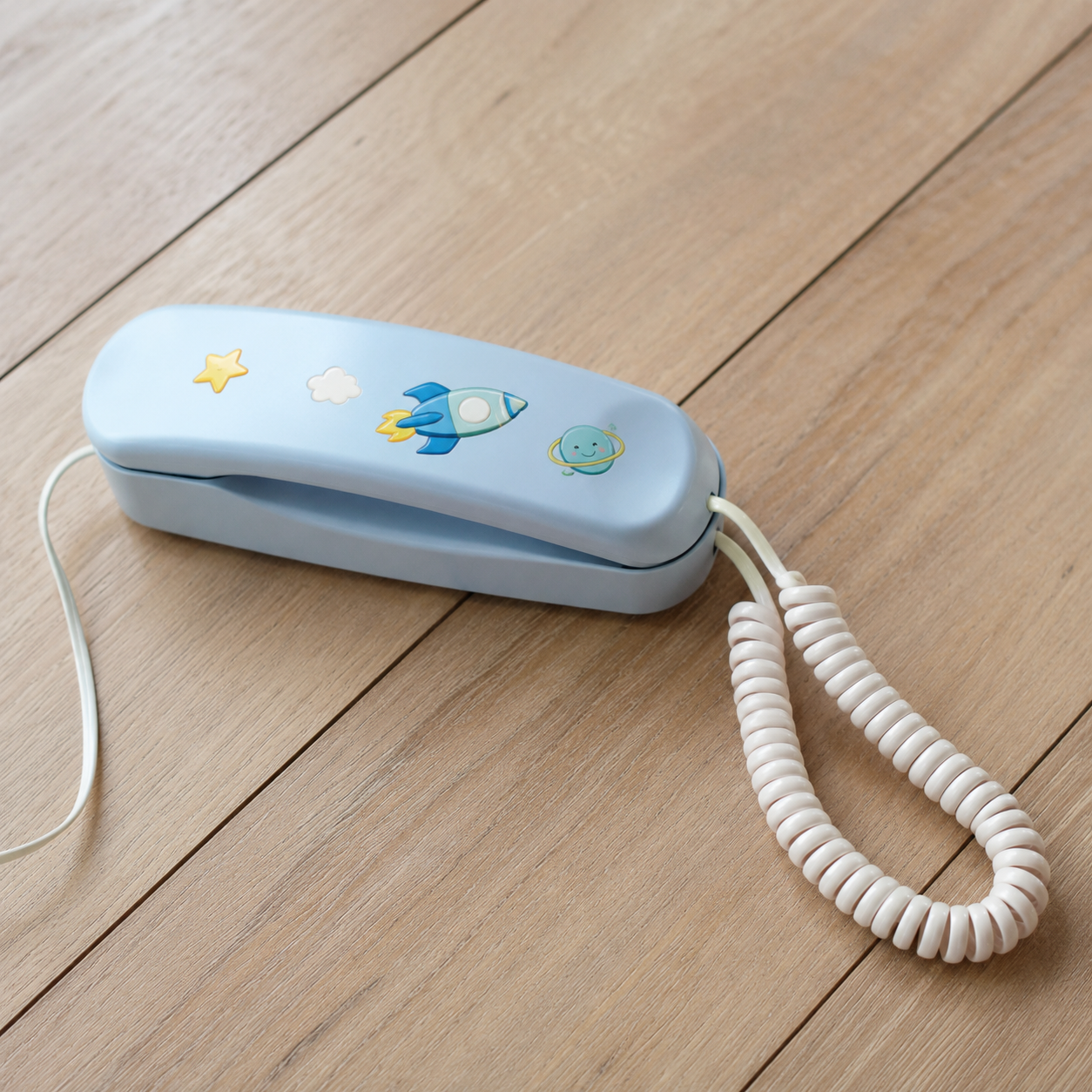
Remember the family landline that sat in the hallway, ringing for whoever picked it up first? Kid-tech company Pinwheel is bringing that experience back — with a modern twist built for today’s parents. The company has officially launched Pinwheel Home, a screen-free, Wi-Fi-connected landline phone designed specifically for young children.
A Landline Without the Landline
Despite its nostalgic look, Pinwheel Home doesn’t rely on any traditional phone infrastructure. The device is styled like a classic desk or wall phone, complete with a retro handset, but it connects entirely over Wi-Fi, eliminating the need for a phone jack or landline service. Parents simply plug it in, connect it to their home network, and manage it from Pinwheel’s caregiver dashboard.
There’s no screen, no texting, no apps, and no internet browsing — just voice calls. That’s very much by design. Pinwheel says the phone is meant to encourage more meaningful, one-on-one conversations while giving kids the independence to call friends and family and practice basic phone skills, without needing to borrow a parent’s smartphone.
Pricing and Available Models
Pinwheel Home comes in two versions:
- The Spark — starts at $68, available in white, black, blue, and purple
- The Classic — costs $79 and includes a retro-style handset along with customizable stickers for personalization
Calls between Pinwheel Home devices are free through the company’s Pinwheel Circle service, which connects family members’ devices to one another at no extra cost. For families who want their kids to be able to call regular phone numbers — like a grandparent’s cell phone — Pinwheel offers two service plans:
- $6.99/month for up to five approved contacts
- $9.99/month for unlimited calling
Pinwheel Home is available now through the company’s website, with an Amazon launch expected this fall.
Why Pinwheel Built a Landline in 2026
The launch taps into a growing concern among parents: how to give young kids some independence and connection without handing them a screen-heavy smartphone. Pinwheel has built its reputation on exactly that in-between space, offering kid-focused smartphones and smartwatches that strip out social media and browsers while still allowing supervised communication.
Pinwheel Home extends that philosophy to an even younger age group — roughly kids 5 to 10 years old — who may not be ready for any kind of connected device, but who still want to call a friend or check in with a parent after school.
The timing lines up with a broader cultural shift away from screens for young children. Research has increasingly linked excessive screen time to emotional, behavioral, and social challenges in kids. Adding to that, recent research from the University of Georgia found that children who spend more time on social media tend to show weaker vocabulary development over time, including more difficulty recognizing and pronouncing words. For parents looking to delay smartphone use without cutting their kids off from friends and family entirely, a screen-free landline offers a middle path.
There’s also a practical backdrop: the vast majority of U.S. households no longer have a traditional landline, which means many young kids today have never experienced picking up a phone that “just makes calls.” Pinwheel is essentially reintroducing that experience as a deliberate, screen-free alternative rather than a relic.
Parental Controls Built In
Even without a screen, Pinwheel Home isn’t a free-for-all. Parents manage the device through Pinwheel’s existing caregiver portal — the same dashboard used for the company’s smartphones and watches — where they can:
- Approve which contacts a child is allowed to call
- Review call history
- Set usage schedules and time limits
That level of oversight mirrors what Pinwheel already offers on its other devices, making Home a natural entry point into the company’s broader ecosystem. Pinwheel has said it eventually plans to let kids use the same phone number across Pinwheel Home and its mobile devices, so children could take calls at home on the screen-free handset while still reducing their overall screen time as they get older.
How It Compares to Tin Can
Pinwheel Home isn’t the only screen-free landline on the market. It joins products like Tin Can, a $100 Wi-Fi-enabled landline that lets parents manage approved contacts through a companion app. The two products are fairly close in concept and pricing:
| Feature | Pinwheel Home | Tin Can |
|---|---|---|
| Starting price | $68 (Spark) / $79 (Classic) | $100 |
| Connectivity | Wi-Fi | Wi-Fi |
| Calls between same-brand devices | Free (Pinwheel Circle) | Free |
| Friends & family calling plan | $6.99–$9.99/month | $9.99/month |
Pinwheel’s lower entry price and tiered plan options give it a slight edge for cost-conscious families, though both products are chasing the same idea: give young kids a way to talk to people they love without giving them a screen.
Final Thoughts
Pinwheel Home is a small device with a fairly clear pitch: bring back the simplicity of the family landline, but make it work for how homes are actually set up today. For parents wrestling with when — and how — to introduce their kids to phone communication, a screen-free, Wi-Fi-powered landline offers a low-stakes way to let kids build independence and connection, without the distractions that come with a full smartphone.




Leave a Reply