

Introduction
For the better part of a decade, the telecom industry has trained us to think about progress in one direction: bigger networks, faster speeds, lower latency. First it was 4G, then 5G, and now the early buzz around 6G is already building. But here’s the uncomfortable truth nobody in the industry wants to say out loud: most people and businesses still haven’t fully used what 5G already offers.
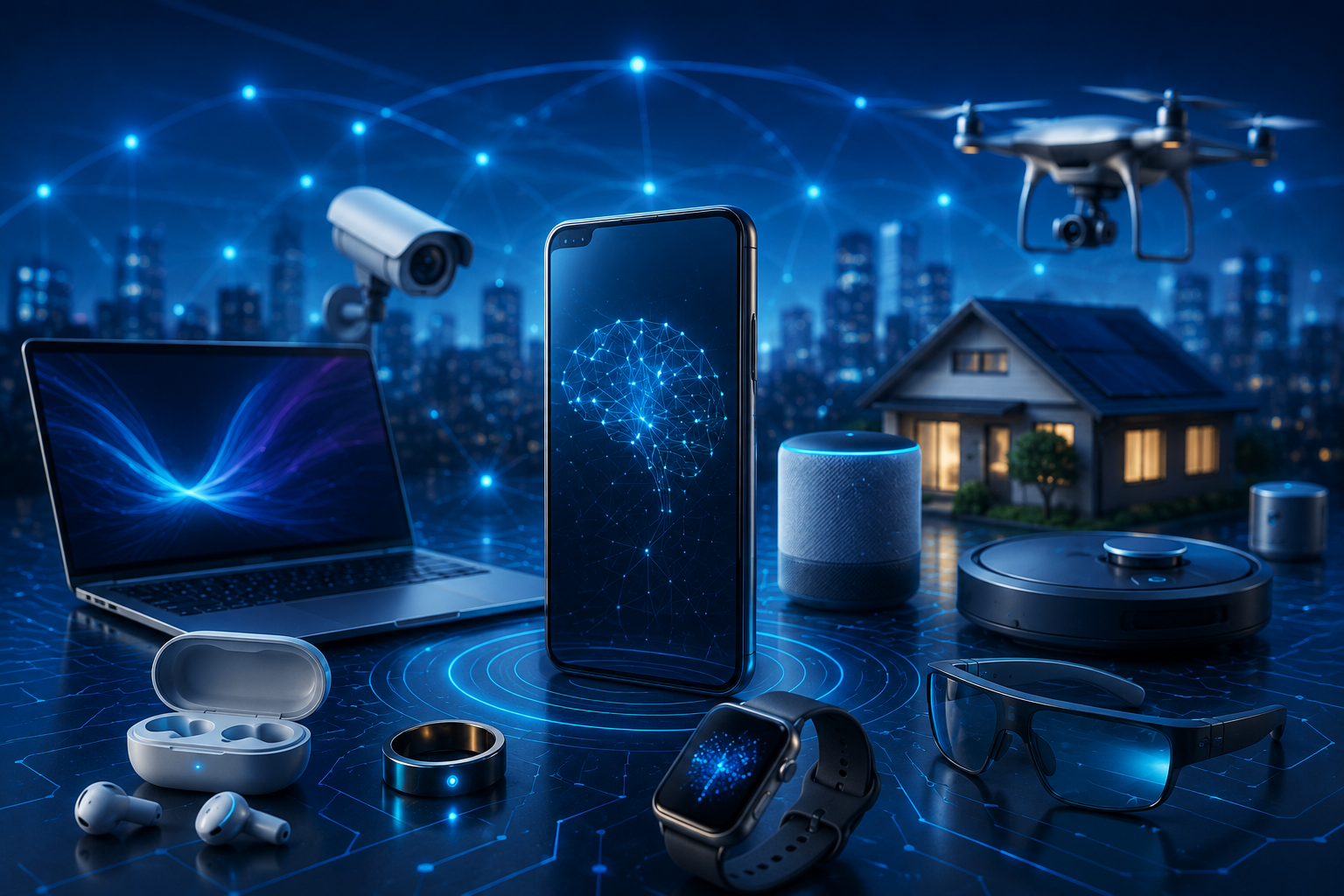
The real bottleneck isn’t network speed anymore. It’s the devices sitting at the edge of that network—phones, sensors, cameras, wearables, and industrial equipment—that are too “dumb” to take advantage of the bandwidth already available to them. The next meaningful leap in connectivity won’t come from a new G. It will come from smarter devices that can think, filter, and act closer to where data is created.
Why 5G Alone Isn’t Delivering on Its Promise
When 5G rolled out, it promised a world of self-driving cars, remote surgery, and instant AR experiences. Some of that has happened. Much of it hasn’t—and not because the network can’t handle it.
A few real reasons the 5G promise has stalled:
- Device hardware hasn’t kept pace. Many IoT sensors and endpoint devices are still built for 4G-era workloads, unable to fully exploit low-latency 5G channels.
- Most data processing still happens in centralized clouds. Sending raw video, sensor readings, or telemetry to a data center and back adds delay, even on a fast network.
- Battery and compute limits force trade-offs. A smarter chip that processes data locally often costs more power—something small, battery-run devices can’t always afford.
- Enterprises are still building the software layer. Network capability is ahead of the applications designed to use it.
In short, 5G built a superhighway. But most of the vehicles on it are still driving 30 miles an hour.
What “Smarter Devices” Actually Means
“Smarter devices” isn’t just marketing language. It refers to a specific shift in where computing happens and how much autonomy a device has. A few defining traits:
1. On-Device AI and Edge Intelligence
Instead of shipping every byte of data to the cloud, modern devices increasingly run lightweight AI models locally. A security camera that can already tell the difference between a person and a stray cat doesn’t need to send every frame to a server—it only sends what matters.
2. Context Awareness
Smarter devices understand their environment: battery state, network conditions, user behavior, and even physical surroundings. This lets them make real-time decisions—like switching to a lower-power mode or prioritizing critical data—without waiting on instructions from a central system.
3. Adaptive Network Behavior
Rather than treating every connection the same way, intelligent devices can dynamically choose how and when to transmit data, easing network congestion and reducing latency for the tasks that truly need it.
4. Interoperability
The best next-generation devices aren’t isolated. They coordinate with other nearby devices, forming small local networks that share processing load intelligently.
Real-World Examples Already Proving the Point
This shift isn’t theoretical. It’s already visible across industries.
| Sector | Old Approach | Smarter-Device Approach |
|---|---|---|
| Healthcare | Wearables that log raw vitals and sync later | Wearables that detect anomalies in real time and alert clinicians instantly |
| Manufacturing | Sensors that report data every few minutes | Edge-enabled sensors that predict equipment failure before it happens |
| Retail | Cameras recording footage for later review | Smart cameras that recognize shopping patterns instantly, without cloud round-trips |
| Smart Homes | Devices that rely entirely on Wi-Fi and cloud APIs | Local hubs that keep basic automation running even when the internet drops |
In each case, the underlying network barely changed. What changed was the intelligence built into the device itself.
Why This Matters More Than 6G Right Now
6G is still years away from mainstream deployment, and history suggests each new network generation takes the better part of a decade to reach full maturity. Meanwhile, smarter devices offer three advantages that are available today:
- Lower latency without new infrastructure. Processing data at the edge cuts delay far more effectively than waiting for a faster network standard.
- Reduced costs. Sending less raw data to the cloud lowers bandwidth and storage expenses for businesses.
- Better resilience. Devices with local intelligence can keep functioning even during network instability—something no amount of network speed can guarantee.
Network generations improve the pipes. Smarter devices improve what flows through them and what happens when the pipe isn’t even needed.
What This Means for Businesses and Developers
Organizations investing purely in network upgrades while ignoring device intelligence are optimizing the wrong layer. A more balanced strategy includes:
- Auditing where data processing currently happens, and identifying tasks that could move to the edge
- Investing in devices with dedicated AI accelerators, not just faster modems
- Designing software that can operate in degraded or intermittent connectivity
- Treating device-level intelligence as a core product feature, not an afterthought
Conclusion
5G was never the finish line—it was infrastructure. The real transformation happens when the devices connected to that infrastructure become capable of independent thought: filtering noise, making local decisions, and only reaching out to the network when it truly matters. Before the industry gets swept up in 6G hype, there’s a simpler, more immediate opportunity sitting in plain sight: build smarter devices for the network we already have.
The next big upgrade isn’t a new G. It’s a new mindset.






Leave a Reply