

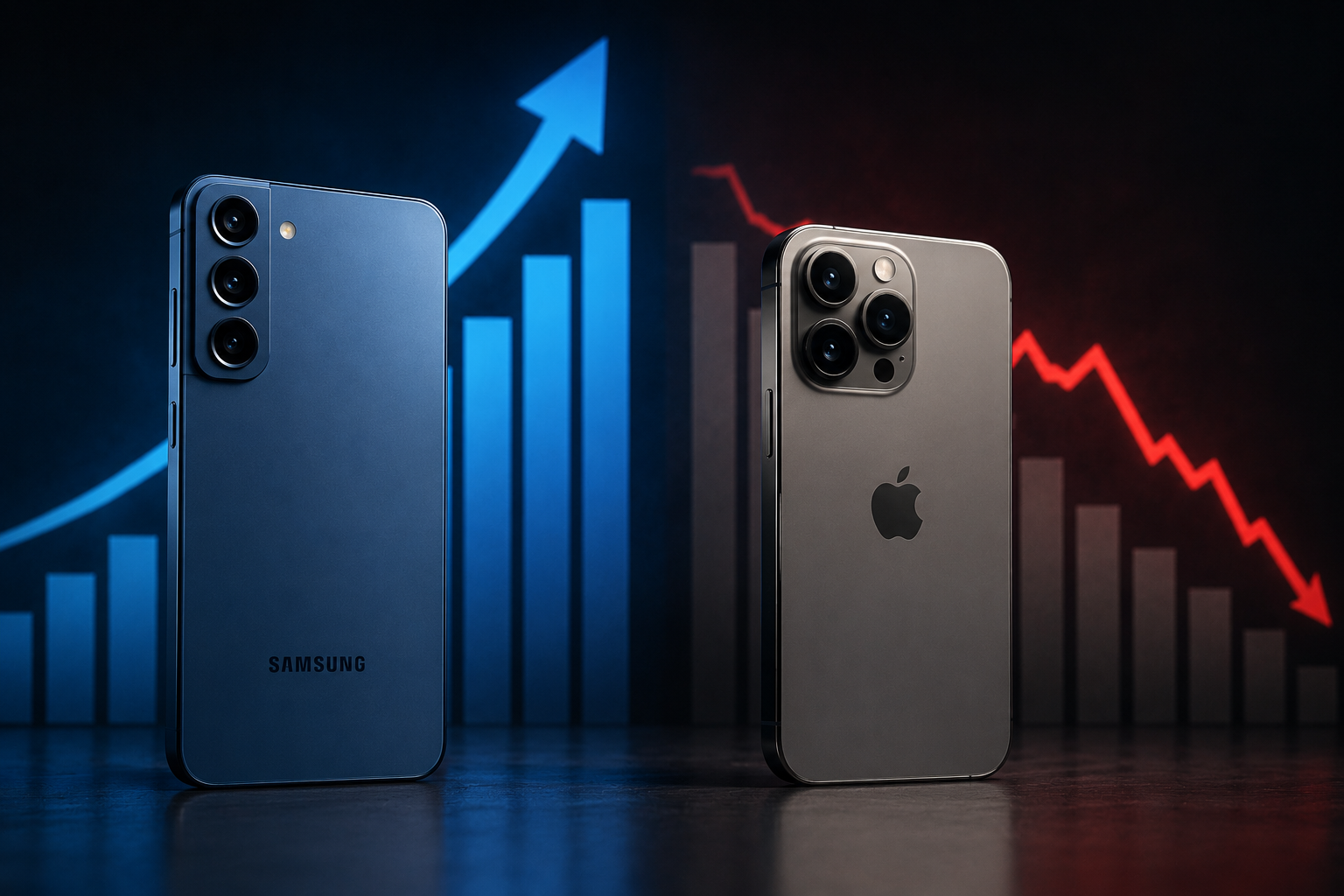
The global smartphone industry just posted its weakest second quarter since 2013 — and in the middle of that slump, Samsung has taken back the title of world’s top smartphone maker from Apple.
According to new data from Counterpoint Research, global smartphone shipments fell 11% year-over-year in Q2 2026. It’s the steepest second-quarter decline the industry has seen in over a decade, and the culprit isn’t falling demand from consumers so much as a supply-side problem: a persistent global shortage of DRAM and NAND memory chips, driven by chipmakers prioritizing AI data center orders over consumer electronics production.
That shortage has pushed manufacturing costs up across the board, forcing most phone makers to raise prices — a squeeze felt hardest in the budget and mid-range segments, where profit margins were already thin. Rising shipping costs, broader inflation, and softer consumer spending have compounded the pressure.
Samsung Reclaims the Top Spot
Samsung finished the quarter with 24% of the global smartphone market, the strongest year-over-year growth of any of the five biggest smartphone brands, and enough to leapfrog Apple back into first place.
A few factors drove the comeback:
- Samsung avoided most of the price hikes that hit rivals in key growth markets like India and the Middle East
- Aggressive seasonal promotions helped offset softer demand elsewhere
- The Galaxy S26 series performed strongly, with the Galaxy S26 Ultra — boosted by its privacy display and AI features — doing much of the heavy lifting and helping cushion weaker sales in Samsung’s lower-priced lineup
Apple Wasn’t Far Behind
Apple had a strong quarter in its own right. iPhone shipments rose 3% year-over-year, pushing Apple’s market share to a record 20% for the quarter — its best Q2 share on record, even while landing in second place behind Samsung.
Notably, Apple was the only major smartphone maker that didn’t raise prices during the industry-wide memory cost crunch. The iPhone 17 series remains the best-selling smartphone lineup in the world, though Apple continued to struggle in China specifically. Older iPhone models also took a hit, as Apple reportedly prioritized memory and parts allocation toward its newest devices.
A Rough Quarter for Everyone Else
Below Samsung and Apple, the picture gets bleaker. Xiaomi, OPPO, and vivo all posted double-digit shipment declines, as rising memory costs disproportionately hit entry-level and mid-range phones — the segments these brands rely on most.
By the numbers:
- OPPO: 11% market share
- vivo: 8% market share
- Xiaomi: held on to 12% market share, leaning on portfolio adjustments and improved retailer financing to limit the damage
Outside the top five, Google’s smartphone shipments actually grew 16%, driven by the Pixel 10 and Pixel 10a, while Huawei’s shipments rose 6% on the strength of its Mate 80, Nova 15, and Enjoy 90 series.
What Comes Next
Counterpoint Research isn’t expecting relief anytime soon. The firm projects global smartphone shipments will decline roughly 14% for all of 2026, and expects the memory chip shortage driving the slump to persist into 2027.
In short: this isn’t a temporary blip tied to a slow quarter. It’s a structural supply problem, driven by the same AI boom reshaping much of the tech industry, and it’s expected to keep squeezing smartphone makers — and the prices consumers pay — for at least another year.




Leave a Reply