

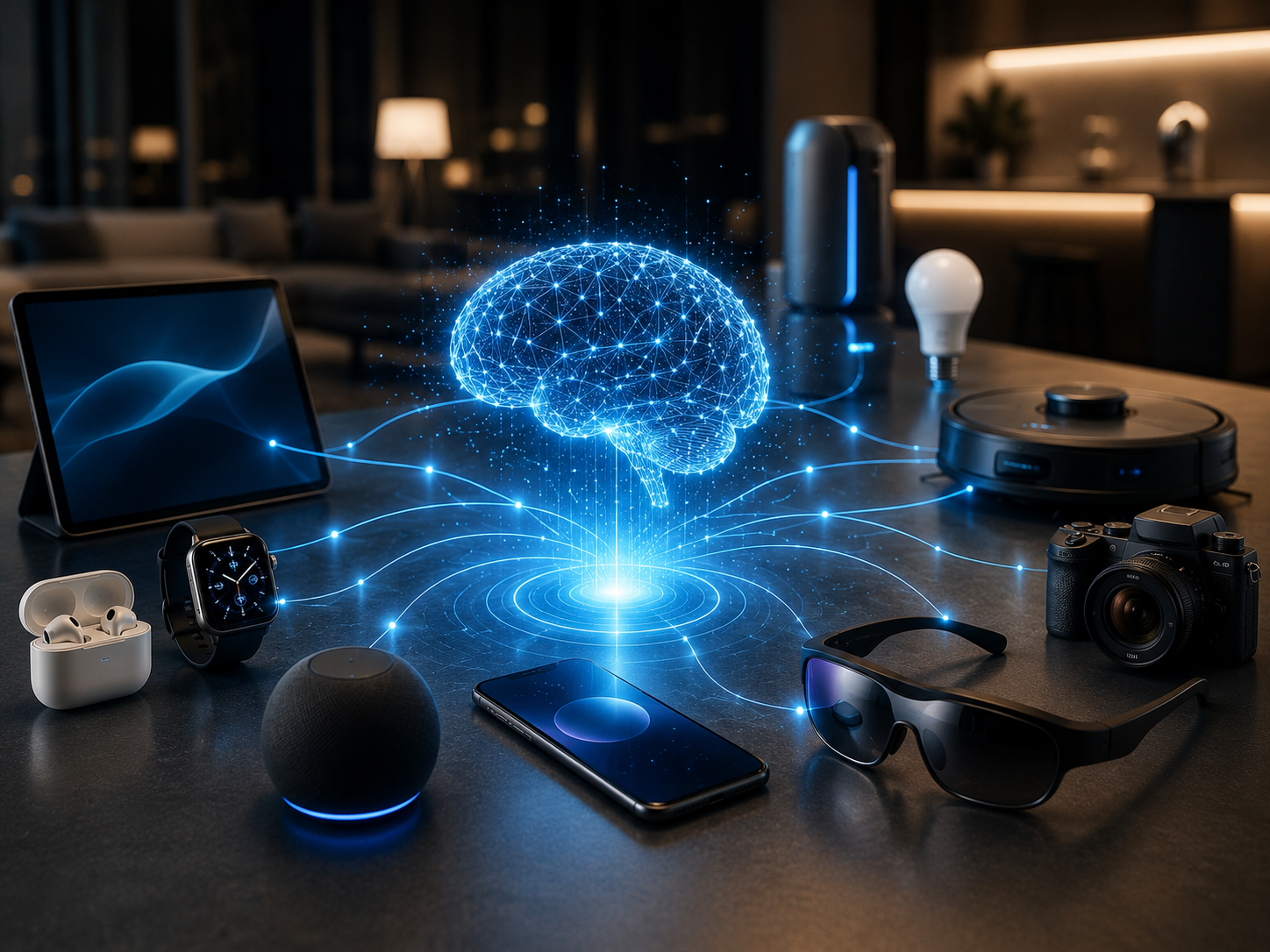
For most of the smartphone era, the pitch was predictable: a bigger battery, a faster chip, another camera lens, a sharper screen. Manufacturers competed on numbers you could put on a comparison chart. That pitch has quietly stopped working. In 2026, the devices getting attention aren’t the ones with the best spec sheet — they’re the ones that seem to understand what you need before you ask for it.
At Mobile World Congress 2026, this shift had a name: the year devices moved from smart to intelligent. The most important announcements weren’t about hardware specifications at all. They were about how devices interpret context, anticipate needs, and act on a person’s behalf.
What Changed: AI Went From Add-On to Foundation
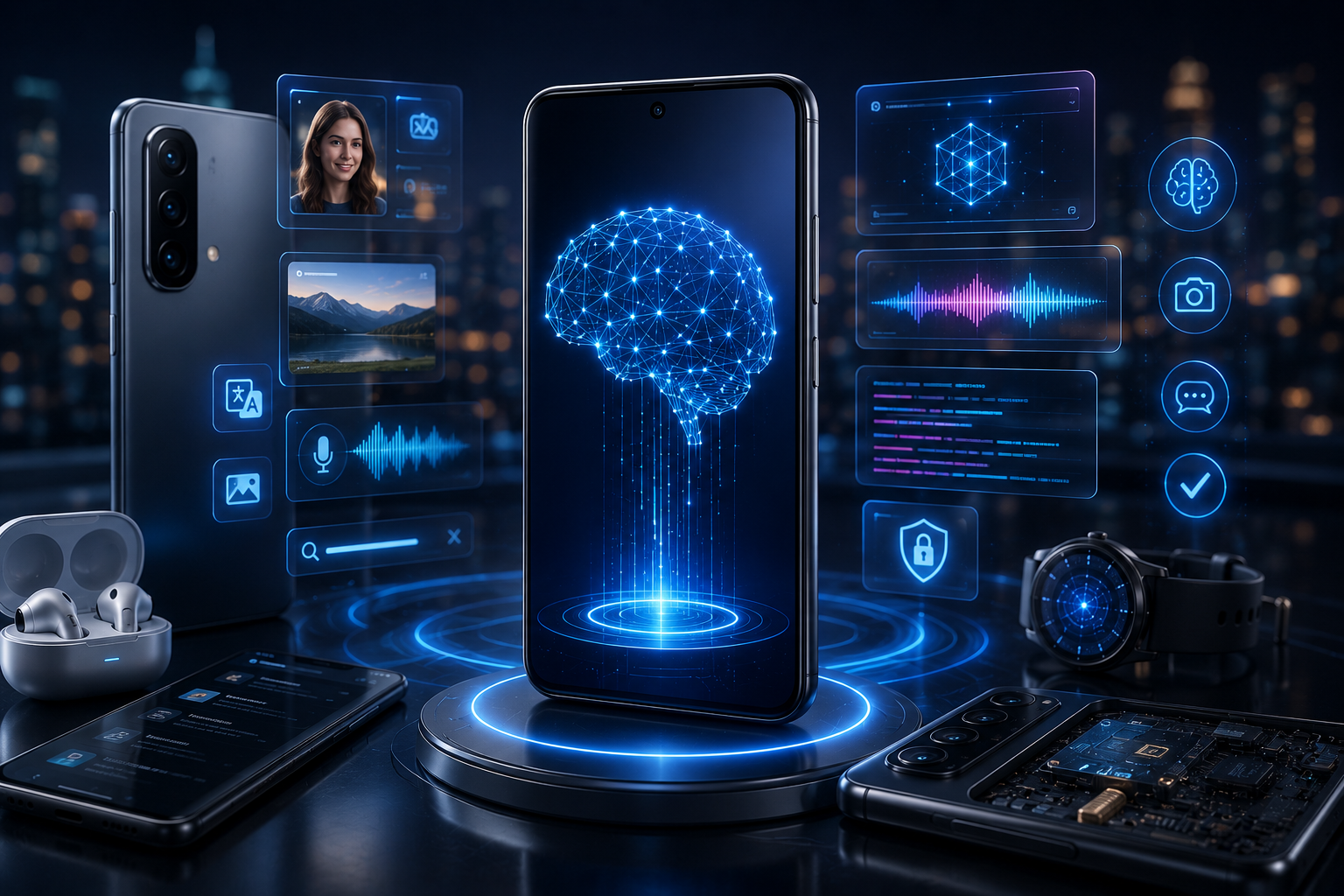
Until recently, AI on a smartphone was a feature bolted onto the core experience — a chatbot app, a photo filter, a voice assistant that lived in its own corner. That’s no longer how the leading devices are being designed. AI is now built in from the ground up, shaping how the device behaves rather than sitting as one app among many.
You can see the shift in what companies are actually naming as headline features. Google’s Pixel line highlights MagicCue, which surfaces relevant information and suggested replies based on what’s happening on screen. Samsung’s Now Nudge watches for context and proactively suggests actions. Circle to Search lets someone search anything visible on their screen without switching apps. None of these are spec-sheet numbers. They’re behaviors.
Competition is no longer defined solely by device specifications. It is increasingly about how effectively companies connect devices, data, and services into a seamless experience.
The Paradox: Volumes Are Falling as Intelligence Rises
Here’s the twist that makes this shift more interesting than a typical marketing pivot: it’s happening while unit sales are actually declining. IDC expects global smartphone shipments to fall by roughly 13% in 2026, with PC shipments contracting by around 11% over the same period — a combination of macroeconomic softness and component constraints, including memory availability and cost volatility.
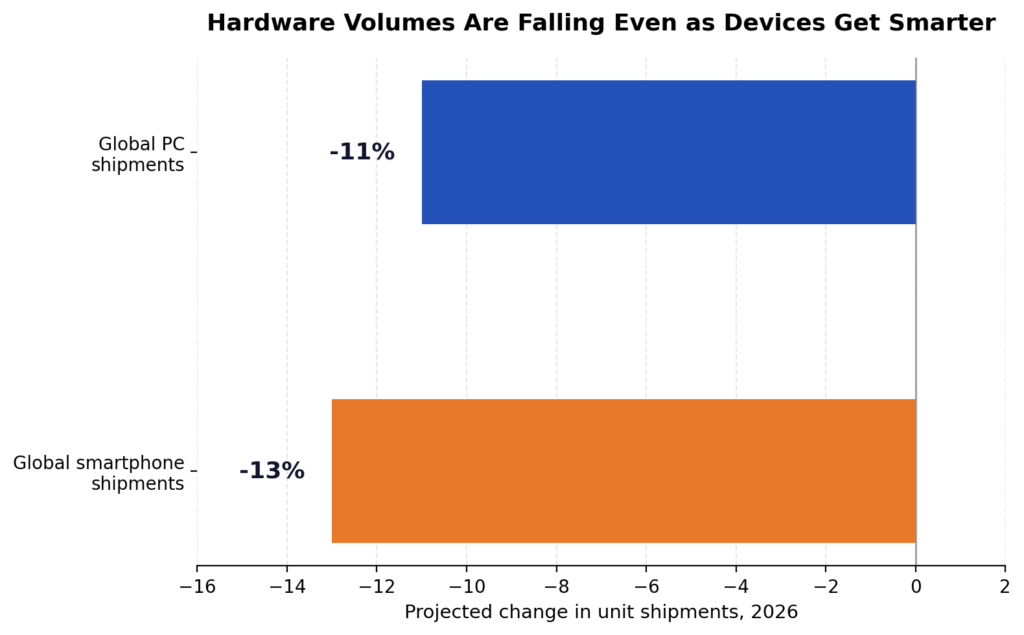
That’s the paradox device makers are navigating right now: demand for genuinely AI-capable hardware is rising even as overall shipment volumes fall. Manufacturers can no longer win simply by selling more units of the same kind of device — they have to win by making each device meaningfully smarter, because that’s increasingly the only lever left that changes a buyer’s decision.
Why On-Device Processing Is the Quiet Engine Behind This
None of this “invisible intelligence” pitch would be credible without a hardware change happening underneath it. NPU-equipped chips — Intel’s Panther Lake, AMD’s Ryzen AI series, and their smartphone equivalents — now run meaningful AI workloads directly on the device rather than sending everything to a cloud server. That shift means faster response times, continued functionality without a reliable connection, and materially better privacy, since raw data doesn’t need to leave the device to get an intelligent response.
Why this matters for buyers: A device that processes AI locally isn’t just faster — it’s fundamentally more private and more reliable than one that depends on a round-trip to a remote server every time it needs to reason about something.
Beyond Phones: The Same Pattern in the Home
The shift from control to intelligence isn’t limited to phones and PCs. Home devices — robotics, appliances, security systems — are following the identical arc. The smart home’s first decade sold itself on connectivity: more devices, more apps, more voice commands. For many households, that added friction rather than removing it. The products gaining traction now are the ones that learn from a household’s patterns and quietly adapt, rather than requiring constant manual input through an app.
| Old competitive axis | New competitive axis |
|---|---|
| Camera megapixels, chip benchmarks | Context awareness and proactive suggestions |
| Number of connected devices in an ecosystem | How seamlessly those devices coordinate without manual input |
| Cloud-powered AI features as an add-on | On-device AI reasoning built into the core hardware |
| “Smart” as a marketing label | Intelligence measured by reduced friction and effort |
What to Watch Next
- Whether manufacturers can normalize “invisible” AI. The industry question for 2026 is whether autonomous, background AI actions can become as unremarkable to consumers as GPS or the camera did a decade ago.
- How the memory shortage affects who can actually ship this hardware. Intelligence-first design still depends on chips and memory that are getting harder to source at scale.
- Whether consumers reward genuine utility over AI-branded features. Not every “AI” label reflects a real behavioral improvement, and buyers are starting to notice the difference.


Leave a Reply